 Anil Motwani
- 7th Oct 2026
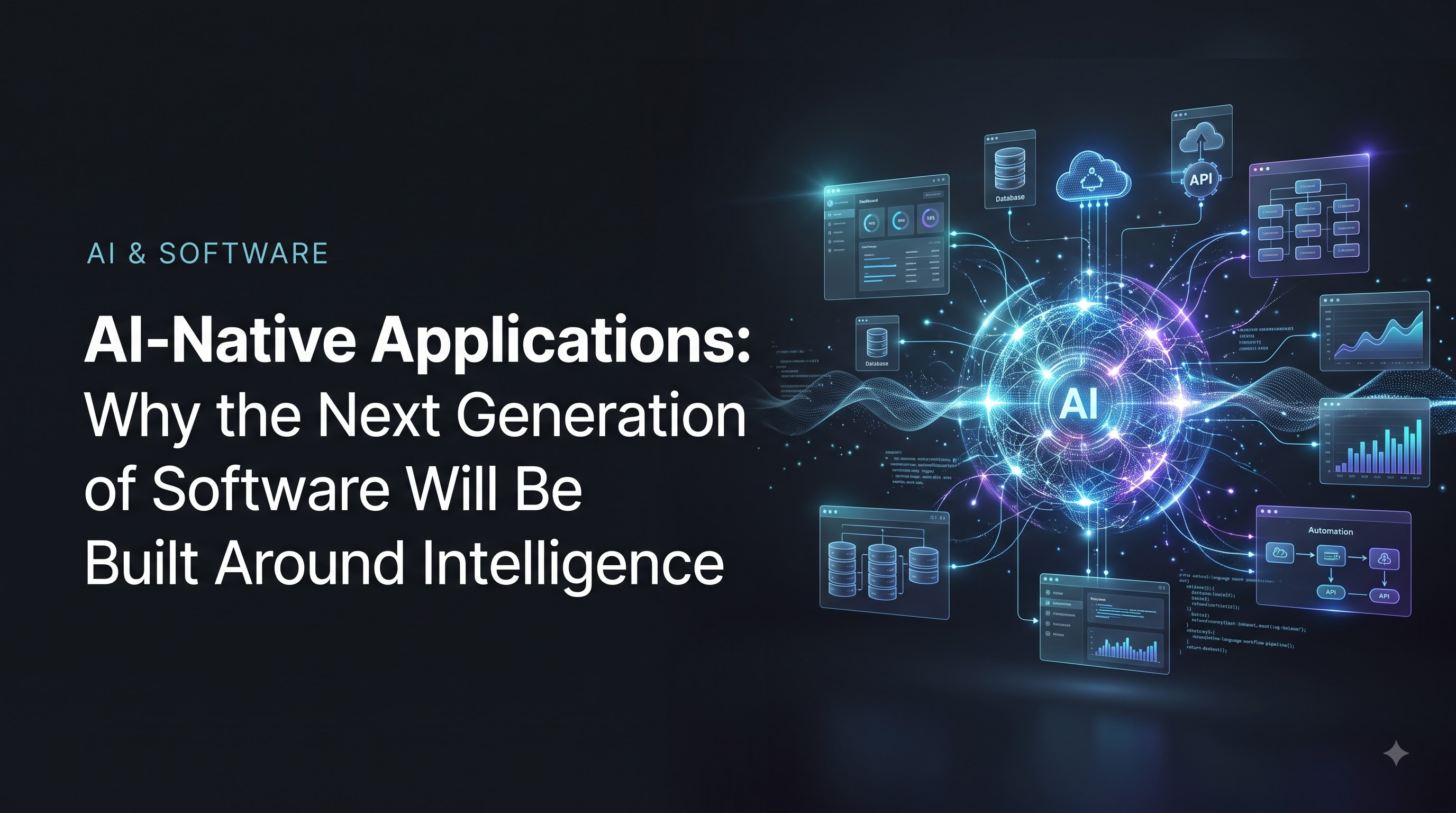
Traditional software is usually designed around predefined screens, buttons, forms, and fixed workflows. Artificial Intelligence is changing this approach by introducing a new concept: AI-native applications. In an AI-native application, intelligence is not an additional feature added after development. It becomes part of the application's core architecture.
Instead of navigating through multiple screens to find information, users can interact with software using natural language. Instead of manually analyzing thousands of records, AI can identify patterns and present meaningful insights. This shift is changing how modern applications are designed, developed, and experienced.
The next generation of software will not only respond to user actions—it will understand user intent.
What Makes an Application AI-Native?
Natural Language Interaction: Users can communicate with applications using everyday language.
Context-Aware Intelligence: The application can use business data and previous interactions to provide more relevant responses.
AI-Powered Search: Users can find information based on meaning rather than exact keywords.
Predictive Insights: Applications can identify trends and provide recommendations before users manually analyze data.
Intelligent Workflows: AI can assist users throughout a complete business process rather than performing a single task.
For example, imagine a business dashboard where a manager simply asks: "Which customers have shown a drop in activity during the last three months?" Instead of manually applying filters and exporting reports, the application can analyze the available data, identify the relevant customers, explain the reason behind the change, and suggest possible actions. Building these systems requires more than an AI model. Developers need strong backend architecture, secure APIs, structured business data, vector search, retrieval systems, permissions, and reliable user interfaces. At ATOA Technologies, we focus on combining modern software engineering with emerging AI capabilities to build scalable digital solutions that solve real business problems.