 Anil Motwani
- 26th Nov 2026
Enterprise software architectures in high-growth companies frequently buckle under the weight of unindexed legacy data silos, trapped documents, and rigid relational databases that cannot handle semantic queries. For CTOs and engineering VPs, the pressure to adopt generative artificial intelligence is relentless, yet public API endpoints introduce unacceptable data leakage risks, compliance violations, and unpredictable latency spikes. Modernizing legacy operations requires more than slapping a wrapper onto a third-party large language model. It demands an enterprise-grade, airtight strategy built around private vector search and self-hosted AI infrastructure. By decoupling sensitive intellectual property from public cloud providers and bringing embedding generation and vector indexing in-house, engineering teams reclaim absolute control over data governance, retrieval accuracy, and compute budgets. This shift transforms dormant operational archives into high-performance knowledge retrieval systems capable of feeding context-aware AI pipelines with sub-millisecond precision.
Designing a production-ready private vector search cluster requires careful orchestration of embedding models, vector databases, and chunking strategies. Raw enterprise data—ranging from legacy PDF manuals to sprawling SQL dumps—must first pass through deterministic chunking pipelines before hitting open-source embedding models such as BGE-large or multilingual E5 running on local GPU nodes. Once vectorized, high-dimensional arrays are indexed using approximate nearest neighbor algorithms like Hierarchical Navigable Small World (HNSW) inside self-hosted vector engines such as Qdrant, Milvus, or pgvector. Architectural trade-offs emerge immediately around memory footprint versus recall accuracy. While In-memory HNSW indexes deliver blazing-fast semantic lookups, they demand substantial RAM provisioning per million vectors. Conversely, disk-based quantization strategies reduce memory overhead by up to 75% at the cost of a marginal drop in recall performance, forcing platform engineers to tune indexing parameters dynamically based on workload SLA requirements.
Achieving true operational modernization demands local data sovereignty, where zero proprietary enterprise data ever leaves the private perimeter during vector embedding or semantic retrieval.
Architecture And Real-World Cost Breakdown
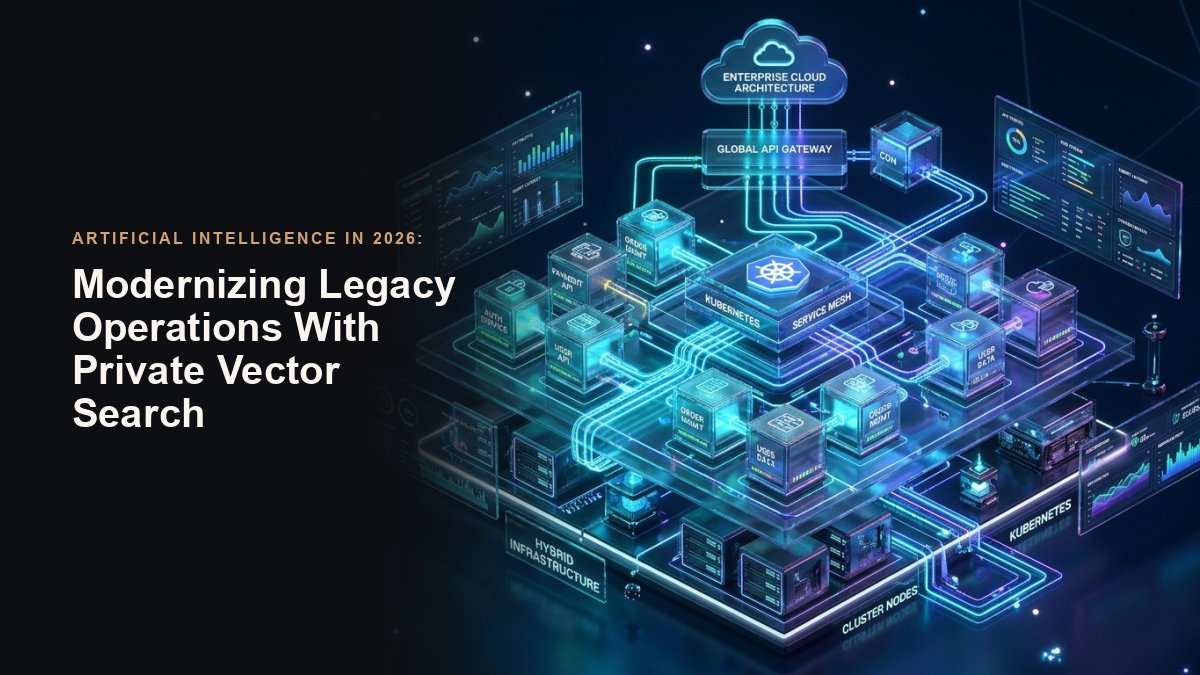
- Infrastructure Provisioning: Deploying self-hosted GPU nodes (e.g., NVIDIA A10G or L4 instances) alongside managed Kubernetes clusters to orchestrate vector database containers with dedicated NVMe storage pools.
- Embedding Pipeline Optimization: Implementing asynchronous document chunking and batch embedding generation using local Hugging Face transformers to maintain ingestion throughput above 500 pages per minute.
- Vector Index Tuning: Configuring HNSW parameters (M=16, ef_construction=200) to balance index build times against query latency thresholds across multi-tenant enterprise datasets.
- RBAC And Namespace Isolation: Enforcing strict multi-tenant access control at the vector collection level to prevent unauthorized cross-departmental data retrieval during semantic queries.
- Cost Management & Monitoring: Tracking total cost of ownership (TCO) through local Prometheus and Grafana dashboards, balancing self-hosted compute overhead against per-token commercial API pricing.
Modernizing legacy operations through private vector search and self-hosted AI delivers measurable return on investment by cutting internal search latency, eliminating recurring third-party API costs, and eliminating compliance liabilities. Enterprise engineering teams typically move from initial proof-of-concept to production deployment within an eight to twelve-week window when utilizing modular containerized components. The foundational step involves auditing existing data repositories, selecting an appropriate open-source embedding model, and provisioning a dedicated staging cluster to benchmark vector indexing performance. By retaining complete ownership of the inference and retrieval stack, organizations future-proof their data operations against shifting regulatory frameworks and pricing volatility. Ready to take control of your enterprise AI infrastructure? Contact ATOA Technologies today to architect a secure, high-performance private vector search environment tailored to your technical stack.